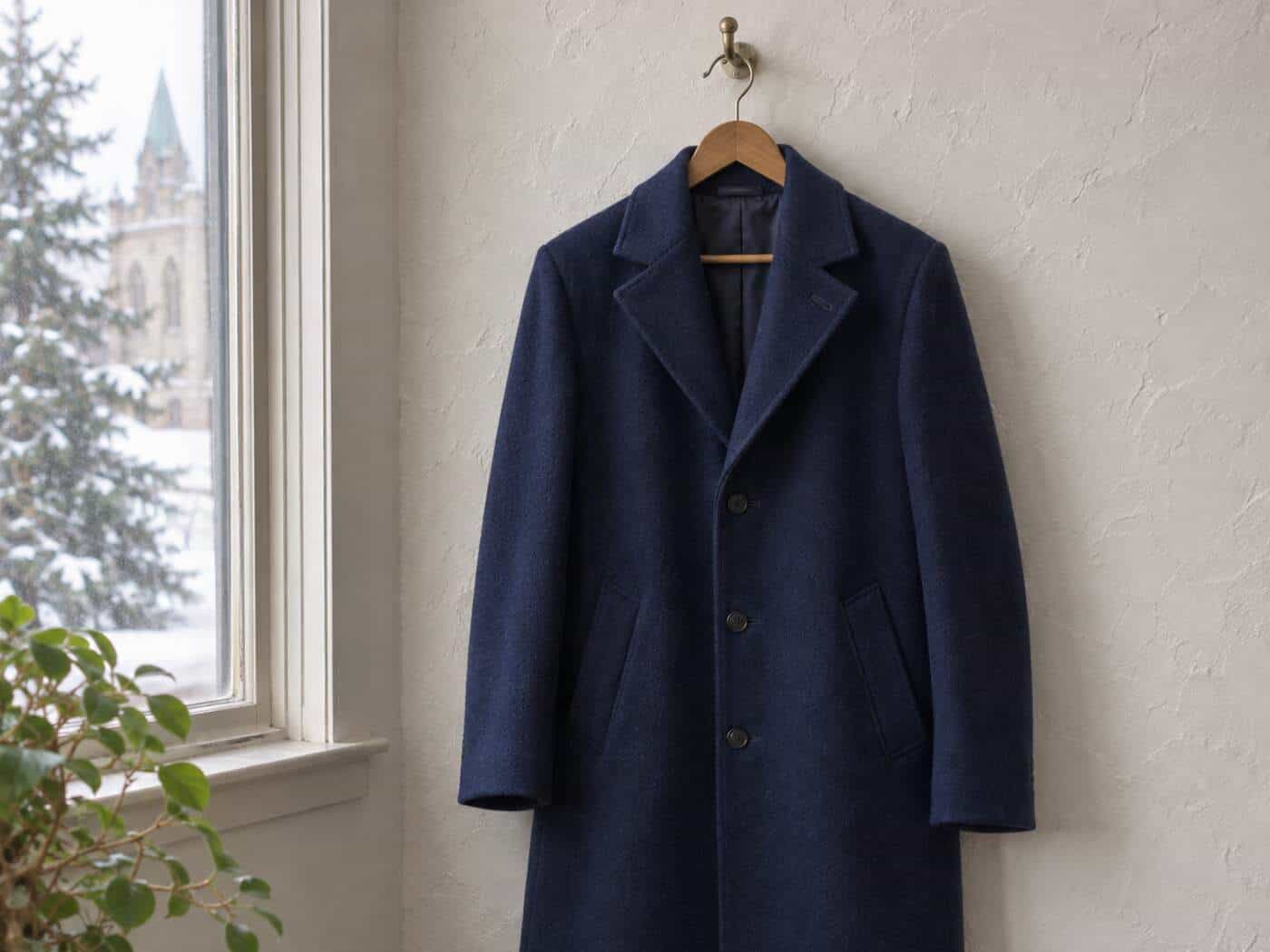
In short: investment pieces are clothes you pay more for because you expect to wear them often and for years. Choose classic over hype: work out the cost per wear, check the fibre label and the seams, insist on a good fit, make sure the piece works with at least five things you already own, and never buy on the spot out of fear of missing out.
An investment piece is a coat, jacket, pair of boots, bag or knit that costs more than you would usually spend, bought on the basis that you will wear it so often and for so long that it pays its way. The idea is sound, and it has environmental weight behind it. It is also easy to get wrong. Price is not the same as quality, and a fashionable label is not the same as a lasting design. This guide sets out a practical method, drawn from boutique buyers and published research, with every source listed at the end.
What makes something an investment piece? The meaning in practice
Three things: you will wear it a lot, it will last, and you will still want to wear it in five years. All three have to be true. A beautifully made jacket in a colour you never wear is not an investment, and neither is a cheap staple that falls apart after one winter.
The phrase “classic over hype” comes from a 2017 ELLE Canada guide by Liz Guber, which drew on advice from Nic Jones, co-owner of the Toronto boutique Jonathan+Olivia. The core point is that the pieces worth paying for are usually the ones least tied to a single season.
Work out the cost per wear
Cost per wear is the price divided by the number of times you expect to wear something. A $600 coat worn 150 times over three winters costs $4 a wear. A $120 coat worn 15 times before it pills and loses shape costs $8 a wear. The more expensive coat is the cheaper one.
Be honest about the number. Count how often you wear the closest thing you already own. If you wear a navy wool coat three days a week from November to March, that is roughly 60 wears a season. If you are buying a statement piece you might wear to four events a year, the arithmetic is very different, and that is fine, as long as you know it.
Why buying fewer, better clothes matters
Keeping clothes in use longer has a measurable effect. The UK charity WRAP’s 2012 study Valuing our Clothes found that extending the active life of clothing by nine months would cut its carbon, water and waste footprints by around 20 to 30 per cent each, and would save about £5 billion a year in the resources used to supply, launder and dispose of clothes in the UK. It would also lift the average life of a garment to about three years.
Investment pieces are one of the simplest ways to get there. A garment you love and that is well made will stay in your wardrobe longer than one you bought on impulse.
Read the label: what Canadian law requires
In Canada, the label tells you more than many shoppers realise. The Competition Bureau’s guide to the Textile Labelling and Advertising Regulations explains that consumer textile articles must show fibre content as a percentage by mass for every fibre making up 5 per cent or more, in both English and French, together with the dealer’s name and address or a CA identification number.
That means you can check what a garment is made of before you pay for it. Care labels, by contrast, are voluntary in Canada; where they are used, they follow the CAN/CGSB-86.1-2003 standard. A missing care label is not a red flag on its own, but ask how to clean a piece before buying it.
| On the label | Required in Canada? | What to look for |
|---|---|---|
| Fibre content (% by mass) | Yes, for fibres of 5% or more | High natural fibre content in coats and knits; check blends |
| English and French | Yes | Both languages on the label |
| Dealer name or CA number | Yes | Who stands behind the product |
| Care instructions | No (voluntary) | Whether you can realistically clean it |
Check the construction
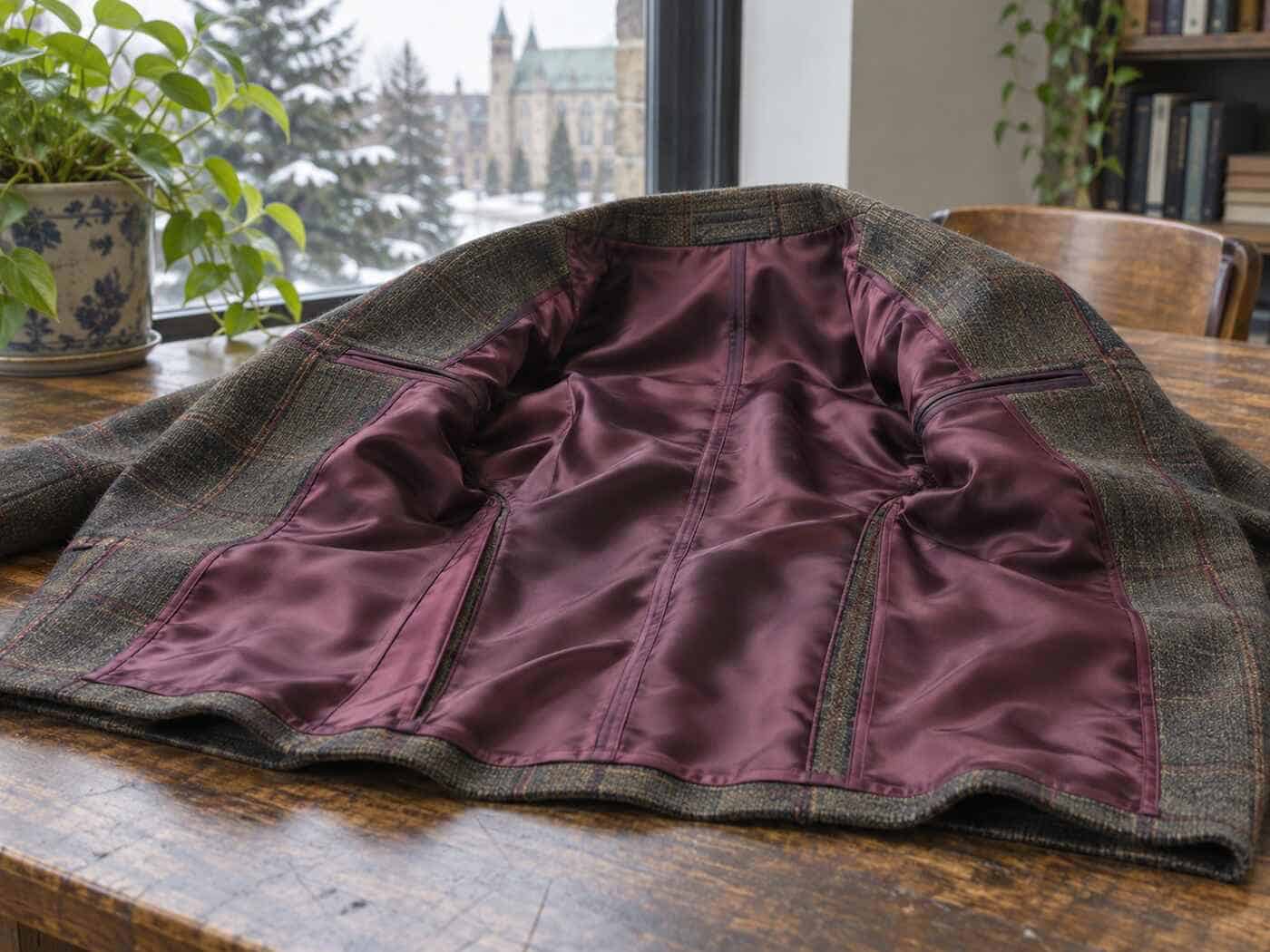
Turn the garment inside out. Seams should be straight, even and finished so they will not fray. Patterns such as stripes and checks should line up at the seams. Buttons should be sewn on firmly, ideally with a spare. On a coat or jacket, a full lining usually means it will hang better and last longer. Zips should run smoothly and be set in neatly.
Feel the fabric. Good wool has a springy, dense hand and recovers when you crush it. Cotton shirting should feel smooth, not papery. Leather should be supple and even in colour. None of this requires expertise; it requires a minute of attention that most shoppers skip.
Fit first, label second
An expensive piece that does not fit will not be worn. Shoulders on jackets and coats are hard to alter, so get those right. Sleeve and trouser lengths are easy, which is why services such as the free hemming once offered by Ossington boutiques were so valued; our history of the Jonathan and Olivia boutique describes how service built loyalty.
Move in it. Sit down, reach forward, lift your arms. If you have to think about the garment while wearing it, it is not the right one.

The five-outfit test and other rules
ELLE Canada’s guide offers a quick check: within 60 seconds you should be able to think of five outfits the piece would go with using things you already own. If you cannot, it will probably sit in the cupboard.
The same guide warns against “purchase FOMO.” Ask the shop to hold the piece and come back. Nic Jones told the magazine: “I’d rather people walk away or come back in and try it on again five more times.” A good shop will not pressure you; he added, “We understand that some things cost a lot of money, and we don’t take it lightly.”
Timing helps too. The guide suggests shopping end-of-season sales in August and February, when classic pieces from the previous season are often reduced. Classic pieces, by definition, will not look dated next year.
Classic over hype in practice
Hype pieces are tied to a moment: a logo, a collaboration, a silhouette that is everywhere this season. They can be fun, but they rarely pass the cost-per-wear test. Classic pieces are the ones directional designers keep returning to in slightly different forms: a well-cut navy coat, straight raw denim, a plain white shirt, a grey crew-neck knit, simple leather boots. Our guide to directional fashion explains how good buyers balance the two. For places to shop, see Toronto’s independent boutiques.
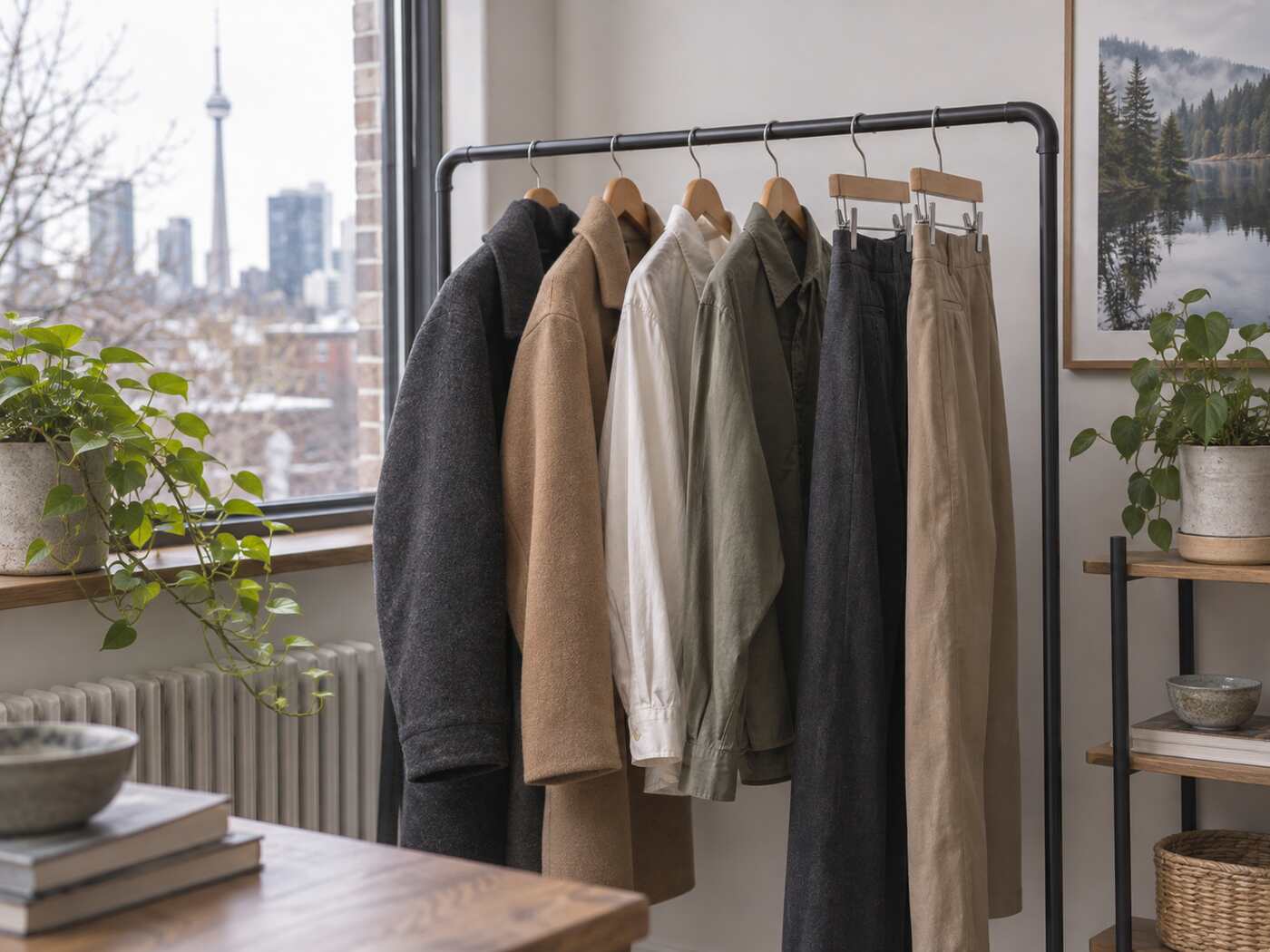
Classic wardrobe essentials worth paying for
Which investment pieces earn their keep depends on how you live, but the same categories come up again and again because they are worn most:
- A winter coat. In a Canadian winter it may be worn almost every day for five months. Wool or a wool-rich blend, a full lining and room for a knit underneath.
- Everyday shoes or boots. Leather that can be resoled extends their life by years.
- Denim. A straight or slim cut in dark indigo works with almost everything and ages well.
- A knit. A plain crew-neck in good wool or cotton, in navy, grey or black.
- A jacket. An unstructured blazer or a simple work jacket that can be dressed up or down.
Start with the item you wear most. That is where the cost-per-wear arithmetic works hardest in your favour.
Key takeaways
- Investment pieces are worth it only if you will wear them often, they will last, and you will still want them in five years.
- Cost per wear (price divided by expected wears) often shows the dearer option is cheaper.
- WRAP found that nine more months of active use cuts clothing’s carbon, water and waste footprints by about 20 to 30 per cent each.
- Canadian labels must show fibre content by percentage in English and French; care labels are voluntary.
- Choose classic over hype, pass the five-outfit test, and never buy under pressure.
Common questions
What are good first investment pieces?
Usually the things you wear most: a winter coat, a pair of everyday boots or shoes, good denim and a versatile knit. Start where your cost per wear will be lowest.
Are designer labels always better quality?
No. Check the fibre label, the seams and the fit on every piece, whatever the name on it.
When is the best time to buy an investment piece?
End-of-season sales in February and August are good times for classic designs, according to ELLE Canada’s guide. Never rush a decision to catch a sale.
Do care labels have to be on clothes in Canada?
No. Fibre content labelling is mandatory, but care labelling is voluntary under the CAN/CGSB-86.1-2003 standard.
How we put this together: the buying method combines advice published in ELLE Canada with the legal requirements set out by Canada’s Competition Bureau and the findings of WRAP’s 2012 Valuing our Clothes study. The cost-per-wear figures are worked examples, not prices from any shop.